 NVDL
Holding NVDL overnight leaves you exposed to NVIDIA-related news, a changing return path and the next tradable price. A stop order does not guarantee that you can exit at yesterday’s level while the relevant market is closed.
If the position is already in your account, begin with what you own and what can happen next. You cannot reverse a completed overnight interval, but you can verify the position, identify upcoming events and decide whether the remaining exposure still matches the task you intended.
Establish the position you actually carried
Record the number of shares, entry fills, current available quantity and open orders. Separate a filled position from a pending purchase or an unfilled sale. An order submitted near the close may have filled partially, leaving a different overnight exposure than expected.
Use the account’s executed-trade record, not the amount originally typed into the ticket. Check whether an existing exit reserves shares or can conflict with a second instruction. If you plan to reduce the position, calculate the residual quantity after any completed sale rather than assuming the entire holding has disappeared.
Then reread the objective in the NVDL prospectus. The fund resets its exposure for a daily target; your original purchase price does not freeze the leverage relationship. Keeping the same share count through another close creates another day of exposure on a changed fund value.
Identify the next real trading opportunity
The next available session depends on the exchange calendar and your broker’s security-specific access. A phone app may remain open while the venue is closed. Its displayed last price can be a historical print rather than a price at which your order could execute now.
Check the regular, extended and overnight settings separately. A broker’s overnight service may cover only selected securities, and conditional orders may be restricted to different sessions. Do not assume that a security appearing in search is eligible for all of them.
The Nasdaq holiday notice is especially relevant to this review: November 26, 2026 is Thanksgiving, and November 27 has an early close. A shortened trading day can also change how much time you have to review an order before another closure. Use Eastern Time when comparing a US schedule with your local clock.
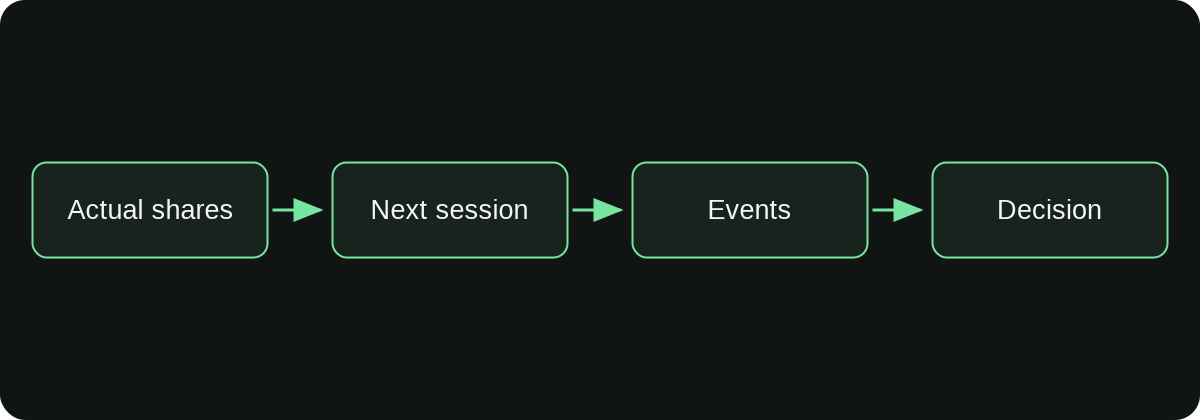
Read the event calendar before choosing an action
Look for NVIDIA earnings, company announcements, material filings and scheduled macroeconomic releases that can occur before your next intended exit. Use the issuer’s investor-relations site for a corporate release; a social-media countdown is not a confirmed date.
NVIDIA’s November 17, 2026 earnings release is a completed event, not an upcoming appointment. Its results describe the quarter ended October 25. Do not carry an old earnings date forward to the next quarter without checking a new official announcement.
Unscheduled news remains possible even when the calendar is empty. Product restrictions, litigation, customer spending changes or company leadership developments can arrive outside your monitoring window. A calendar helps organize known events; it cannot provide an all-clear signal for a leveraged position.
Compare three choices against the original reason for holding
The practical choices are to retain the position, reduce it or close it when trading is available. None is universally correct from the fact that one night has passed. Evaluate the choice against the intended exposure, financial loss capacity and ability to monitor the next session.
If you retain the shares, specify what evidence would invalidate the position and when you will review it again. “Until it recovers” is not a measurable review condition. It can quietly turn a short-term trade into an indefinite attempt to avoid realizing a loss.
If you reduce the shares, record the new dollar exposure and update any pending exits. If you close them, confirm execution and residual quantity before considering the task finished. The position-closing guide distinguishes a cancellation request, accepted sale and completed exit.
Do not add shares solely to lower the average entry price. An average is an accounting result, not evidence that the next daily return has become safer. Any additional purchase increases the amount exposed to the next adverse move.
Stress the gap rather than trusting the trigger
An overnight gap can move the first executable price beyond a planned stop. A stop-market order prioritizes a market execution after triggering, subject to broker rules; it does not preserve the trigger as the sale price. A stop-limit can instead remain unfilled if the market moves beyond its limit.
The SEC’s stop-order bulletin explains these differences. For this review, ask a concrete question: if the next tradable market is materially below the intended exit, what dollar loss and remaining position would you face? Use an adverse scenario without treating its size as a maximum.
A smaller position can reduce dollar consequences, but it cannot remove the gap itself. An alert provides information only when received and acted upon. Neither control should be described as overnight insurance.
Understand what another day changes
Your longer-period result follows successive daily returns, costs and actual market prices. It is not locked at twice NVIDIA’s cumulative movement from your original purchase. A rebound in the stock can therefore coexist with a disappointing result in the leveraged fund.
For example, equal percentage rises and falls do not cancel arithmetically because they apply to different balances. The daily-return calculation provides a reproducible model. Use it to understand the mechanism, not to predict that tomorrow will repeat a particular path.
The review should end with a written next action and a confirmed order state. If you cannot monitor the position during the next meaningful window, that constraint belongs in the decision now. It should not be discovered only after the market moves.
Frequently asked questions
Will a weekend create two extra daily leverage resets?
Do not count calendar days as exchange trading days. The objective is defined around trading-day measurement periods. Weekend news can nevertheless change the price available when trading resumes; the absence of two ordinary sessions does not eliminate gap risk.
Does an unrealized overnight loss become harmless if I do not sell?
No. The account’s economic value has changed even before a sale realizes the result for accounting or tax purposes. Whether to retain exposure should depend on its forward-looking role and risks, not that distinction alone.
Should I move the shares to a broker with longer hours immediately?
An account transfer is not an instant exit mechanism and can introduce temporary restrictions. Ask both firms about timing and availability before initiating one; do not rely on a transfer to solve an imminent market event.