 NVDL
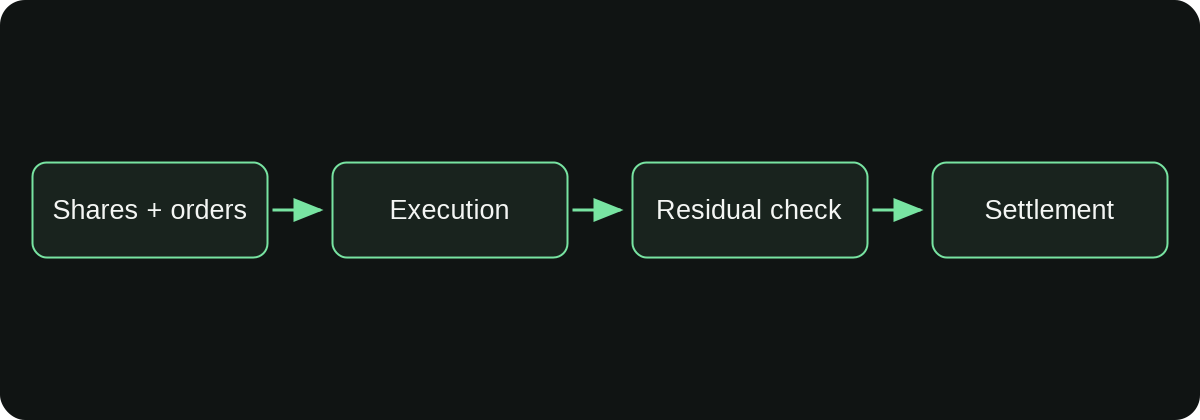
To close a long NVDL position, verify the shares available to sell, reconcile existing orders, submit the intended exit and confirm execution. Then check for any remaining shares or live instructions. An accepted sell order, a filled sale and cash available for withdrawal are different stages, so each requires its own confirmation.
Begin with a position-and-order reconciliation
Open the correct account and identify the long NVDL quantity. Distinguish total shares, available shares, fractional holdings and any quantity already committed to an open order. A pending transfer or another instruction can affect what the broker will allow you to sell.
List existing orders before adding another one. A stop, limit exit or linked order may still be live. If the broker does not coordinate the instructions automatically, a separate sale can create a conflict or leave an unintended instruction in place after the position changes.
Do not assume a cancellation request has completed. Read the confirmed status and any execution that occurred before cancellation. In a moving market, an order can fill while a change is being processed. The execution record, rather than the original request, determines the remaining position.
Choose whether you are reducing or fully closing
Write the intended result as a quantity: the shares to remain after the transaction. This avoids confusing a partial profit-taking instruction with an instruction to close everything. If several purchase lots exist, check whether the broker supports lot selection and when that choice must be finalized.
Fractional positions may follow different order terms from whole shares. A screen can show a position that appears nearly closed while retaining a small fraction. Check the broker’s handling rather than assuming a whole-share sell ticket automatically includes the residual amount.
This article addresses closing shares already held long. Selling more shares than are available can be rejected or create a different arrangement where permitted. Do not use a short-sale workflow as a substitute for checking the long position and its outstanding orders.
Read the market before selecting the exit instruction
Confirm the quote’s timestamp, session, bid, ask and available size. A displayed unrealized gain based on a last price is not a promise that the entire holding can be sold at that price. The relevant executable interest can change before and during the order.
The SEC explanation of order types describes the distinction between execution priority and a price condition. A sell limit can prevent an execution below its specified price but may remain unfilled. A market sale does not reserve the quote that appeared when you started the ticket.
Match the order duration and session to the intended task. If the session is closed, a broker can accept an order for later handling without completing the exit. A working instruction overnight still leaves the economic exposure in place until an actual sale occurs.
Check the fill rather than the notification headline
After submission, review the status and filled quantity. A partially filled order may leave both a continuing holding and a live residual instruction. Reconcile those two numbers before deciding whether a further action is needed.
Save the execution confirmation, including price, quantity, time and charges. If there were several executions, check how the broker reports the average and individual fills. A favorable first fill does not establish that the rest of the order received the same price.
If you modify an order, verify the resulting instruction rather than assuming the old and new versions cannot coexist. Broker-specific cancel-and-replace handling matters. A research article cannot promise how every platform resolves a race between modification and execution.
Verify the account is actually flat
Check the position view after the completed sale and identify any remaining whole or fractional shares. Then review open orders again. An exit instruction whose quantity was not updated can remain relevant even when a position screen appears to show zero.
If linked exits were used, confirm that the remaining legs were canceled or adjusted according to the broker’s rules. An order-cancels-order feature should not be assumed to exist simply because two orders were entered close together. Ask support if the relationship is unclear.
Retain records if the views disagree. Include order identifiers, execution times and the position quantity shown. A display refresh can help, but repeated new sell instructions are not a safe way to resolve an unexplained discrepancy.
Sale proceeds, settlement and withdrawal are separate
The SEC settlement bulletin explains the T+1 framework for most covered US securities trades. Settlement normally follows the trade date by one business day, subject to the applicable calendar and transaction rules.
Available-to-trade cash and withdrawable cash need not update identically. Deposits, transfers, account restrictions and broker processing can also matter. Confirm the withdrawal field and the broker’s terms rather than promising that every completed sale can immediately be sent to a bank.
Around a holiday, check business days rather than adding twenty-four hours. The Nasdaq Thanksgiving notice identifies the November 26, 2026 closure and shortened November 27 session. An early exchange close is not a universal statement about every bank transfer or internal cash-processing cutoff.
Finish with a return and decision record
Calculate the trade from actual purchases, sales, relevant distributions and charges. A screenshot of the final quote is not the proof of realized proceeds. Preserve lot and tax documents for the applicable reporting period without assuming the broker’s profit display resolves all tax questions.
Record why the position was closed and what differed from the original plan. This review can identify a quote-reading error, an unrealistic execution assumption or a changed holding horizon. A profit does not prove the decision process was reliable, and a loss does not alone establish that the fund malfunctioned.
For planning automated exits, the stop-loss and take-profit guide addresses triggers and failure conditions. An eventual exit still needs the same reconciliation of shares, orders and execution.
Frequently asked questions
Can I cancel a sale after it has filled?
A completed trade is not normally canceled merely because you changed your view. Ask the broker about an actual execution error, but do not assume an unfilled-order cancellation process applies after execution.
Does closing NVDL also close my NVDA holding?
No. They are separate instruments and positions. Review any remaining NVIDIA-related holdings independently; selling the ETF does not automatically remove company stock, options or another related fund from the account.
Why does the account still show a distribution after the sale?
Eligibility can depend on the relevant distribution dates and holding record. A later cash payment does not necessarily mean the sale failed. Check the official event and broker record rather than reopening a position to explain the payment.