 NVDL
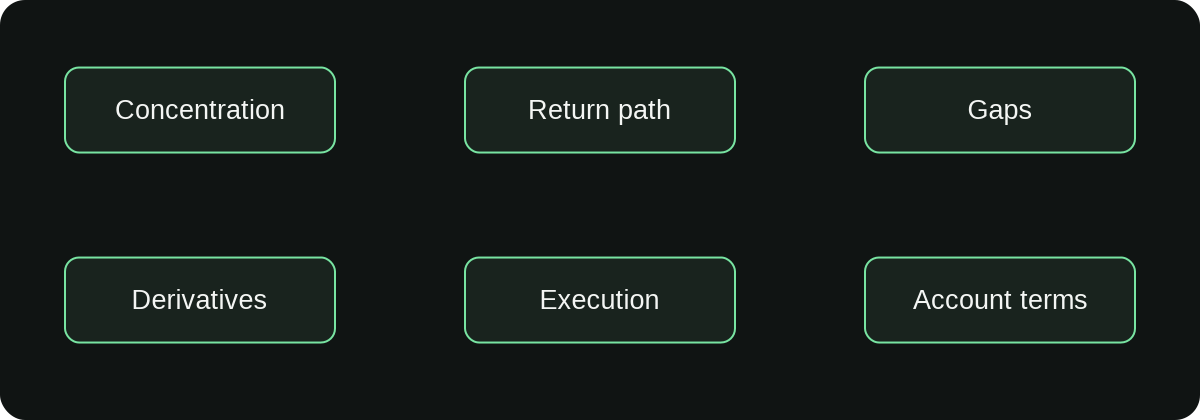
NVDL risk extends beyond NVIDIA falling. Daily leverage, return-path effects, gaps, derivatives and execution can change the outcome even when the underlying investment view seems reasonable. A useful risk plan identifies what can fail, which observation would reveal it and what a proposed control cannot guarantee.
Concentration and leverage amplify the same company exposure
A broad portfolio can distribute exposure among different businesses. A single-stock leveraged ETF deliberately concentrates its reference exposure. Changes affecting NVIDIA can therefore matter across the strategy rather than only one small component of a diversified index.
The SEC statement on single-stock leveraged ETFs explains why these instruments differ from holding the underlying company or a traditional ETF. A collection of NVIDIA-related tickers does not automatically diversify the business risk when all respond to the same underlying stock.
Leverage changes the magnitude of sensitivity as well as the management task. Describe the position in dollars and intended exposure, not just the percentage of shares that look affordable. A low unit price does not limit the size of an adverse percentage move.
A correct direction can still produce an unexpected holding return
Daily compounding means the sequence of gains and losses matters. A multi-day path can differ substantially from twice the stock’s final percentage change. Costs and tracking add separate effects, which should not all be hidden under the word decay.
A position can also begin at an intraday price that differs from the fund’s reference point. Comparing your return with a close-to-close target may then diagnose the wrong problem. Keep actual trade records and matching observations before deciding why performance differed.
The daily-leverage explanation separates those calculations. Understanding the distinction does not remove the risk; it prevents a mismatch from being mistaken for an automatic right to compensation or an inevitable future correction in the ETF price.
Overnight gaps and halts can disrupt an exit plan
News can arrive while an exchange session is closed. When trading resumes, the first executable prices may be far from an earlier reference. A stop instruction does not reserve the price printed before the gap, and a trading halt may interrupt the route the trader expected to use.
The SEC order-type bulletin explains the trade-off between a stop that becomes a market order and a stop-limit whose price constraint can prevent execution. Neither structure guarantees the exact maximum dollar loss planned by the investor.
An alert is a different tool again: it communicates an observation rather than completing a sale. Document which risk the tool addresses. Treating an alert, a stop and an insurance contract as equivalent protections leaves the most consequential failure conditions unstated.
Derivative implementation creates additional dependencies
A fund using derivatives must manage contractual exposure, counterparties, collateral and market conditions. The risk is not adequately described by the name of the underlying company alone. A portfolio can remain NVIDIA-linked while holding assets whose role is collateral or liquidity rather than direct company ownership.
The summary prospectus is the source for permitted strategies and disclosed risks. Reading a permitted instrument list is different from verifying the live portfolio. Current counterparty names or weights should not be guessed from an old report or a general marketing description.
When reviewing implementation, ask what information is dated and what remains unavailable. A missing holdings field on a website does not prove a loss of assets; equally, a functioning quote is not a complete report on the fund’s derivative arrangements.
The trading market adds costs and uncertainty
The last price is a past observation, not a guarantee for a new order. Spreads, available size and changing quotations affect the price achieved. A partial fill can leave a smaller continuing position than intended, while a cancellation request can arrive after some execution has already occurred.
An ETF can also trade above or below a measured NAV. Comparing differently timed values can exaggerate a premium or discount, so identify the convention before drawing conclusions. Neither daily volume nor one candle establishes the order book available for a particular quantity.
Review the broker’s order status and confirmations. The words submitted, accepted, working, partially filled and filled describe different stages. A risk plan that ends when a button is pressed does not establish that the exposure has actually changed.
Account-level leverage is a separate layer
Buying a leveraged ETF in a cash-funded transaction and borrowing to finance the purchase are not the same arrangement. If a margin loan is added, the account’s obligations and liquidation rules need their own review. The fund’s internal leverage does not fully describe that account-level risk.
Likewise, retirement, cash and other account types can have different access and trading restrictions. A successful search for the ticker does not confirm that an order is permitted. Review the actual account terms rather than assuming another person’s broker screen applies to you.
This article does not assign a personal acceptable risk limit. The operational point is to avoid stacking risks that have not been separately identified. An apparently small fund position can become more consequential when it is financed or linked to other concentrated holdings.
Put a limitation next to every proposed control
| Risk | Possible control to examine | What it cannot promise |
|---|---|---|
| Dollar exposure | A deliberately limited allocation | Protection against all loss |
| Execution uncertainty | Price-constrained orders | A completed exit |
| Unobserved news | Source-based alerts | A timely fill or correct forecast |
| Extended holding | Scheduled position review | A favorable future path |
| Account restrictions | Permission and settlement checks | Approval in every situation |
Choose controls according to the actual task and broker functionality. A control can be useful while incomplete. Its limitation should remain visible in the plan, rather than being added only after an unfavorable outcome.
Update the map after an incident or a changed condition. Record what happened, which observation was missing and what can realistically be improved. Avoid turning a single successful escape into a universal rule about where the next market will trade.
Frequently asked questions
Can a single-day loss exhaust the invested amount?
The fund’s disclosures warn that full principal loss within a day is possible. Do not replace that warning with the assumption that a planned stop always preserves a fixed balance. Financing the purchase creates additional account questions.
Does a government registration guarantee NVDL’s market value?
No. Registration and disclosure are not insurance against trading losses. Check the relevant protection’s scope before assuming that a fall in the ETF’s price creates a reimbursement claim.
Does holding fewer days eliminate every risk listed here?
No. A shorter horizon changes some exposures but still includes company moves, execution, spreads and possible interruptions. It also does not guarantee that the trader can exit at the chosen time or price.