 NVDL
An NVIDIA AI roadmap can influence NVDL by changing expectations for future products and NVIDIA’s stock price. A roadmap is not a guaranteed shipment schedule, revenue stream or ETF rally. Evaluate the status of each milestone before interpreting its investment significance.
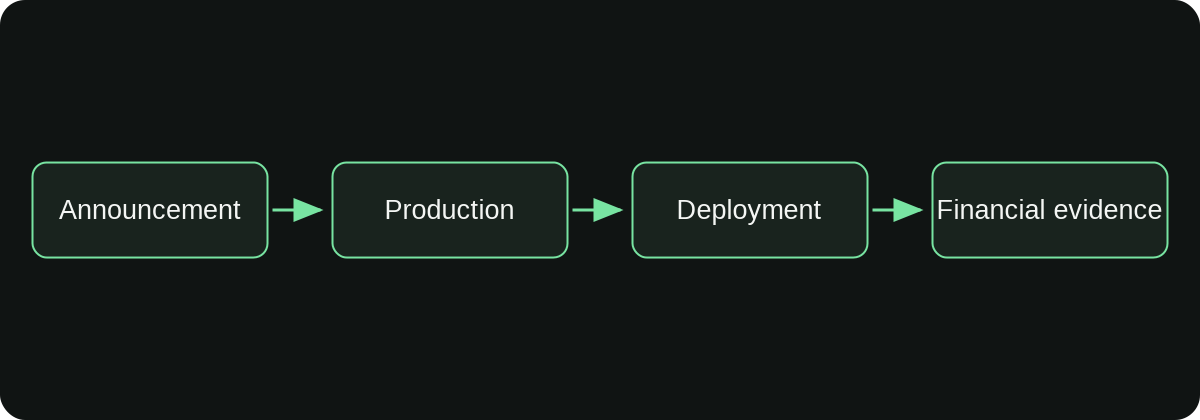
The key task is to compare the new plan with the old one and then follow progress through dated evidence. A technology generation named for the first time, a production update and recognized sales represent different stages. Combining them into one bullish headline loses the distinctions that matter.
Treat the roadmap as a sequence of commitments and possibilities
Create a milestone ledger with the architecture or platform, announced stage, expected timing, dependencies and source date. Identify whether management describes a design plan, production status, availability or deployment. The exact wording matters more than a simplified arrow on a slide.
An architecture can be announced before every system configuration or customer deployment is ready. A broad platform can include multiple components with different delivery schedules. Do not assume that one milestone automatically applies to every product carrying the same family name.
The official GTC 2026 materials provide source context for the company’s presentations. They should be read as dated communications, not an automatically updated promise about the status of every later order.
Use the March announcement as a dated example
NVIDIA’s March 16, 2026 Vera Rubin release described a platform of seven new chips in full production. That is a specific company statement at a specific date; it is more precise than saying only that a future architecture exists.
It still does not establish that every customer installation was complete, every component was immediately available in unlimited quantities or every associated dollar had been recognized as revenue. Those questions require subsequent evidence about configuration, delivery and financial reporting.
For an update written in November, compare later disclosures with the March statement. Do not keep describing a previously announced production milestone as newly revealed simply because a fresh article or video discusses it. Date the event and the follow-up separately.
Compare what changed from the prior plan
A roadmap update can change timing, scope, capability or dependencies. Record the previous version and identify the actual revision. A repeated annual presentation may preserve the broad sequence while adding details that matter only to selected workloads or customers.
Separate a timing improvement from a specification improvement. An earlier delivery could affect the revenue window, while better performance might affect adoption or pricing under particular conditions. Neither effect can be assigned a precise financial value without additional assumptions.
Likewise, a change in naming or presentation does not necessarily indicate a material business change. Compare technical and commercial content rather than counting new labels. An investment note should identify the revised assumption, not merely the number of products mentioned.
Track the path from roadmap to financial evidence
Follow milestones into customer qualification, order commitments, shipment, deployment and recognized results. These stages need not occur in the same quarter. A customer announcement can be relevant without providing enough information to calculate NVIDIA’s future revenue.
The November 17 earnings release is a later financial reference point. Its period and management outlook should remain distinct from a product roadmap. Financial results can help assess progress without allowing an analyst to attribute every dollar to a newly announced generation.
Use consistent units and periods. A multi-year industry spending estimate, a quarterly segment figure and a product benchmark are different measurements. Adding them together or converting one directly into a token-style price target would obscure rather than clarify the investment case.
Explain the market channel without promising a reaction
Investors may revise growth, margins, execution risk or valuation assumptions after a roadmap update. The direction of the stock reaction depends on what changed relative to expectations and what other information arrived at the same time.
A roadmap that appears favorable can coincide with a negative share-price move if the market expected faster progress or values the expected earnings differently. That possibility does not prove the roadmap failed; it shows that business assessment and market repricing are separate steps.
NVDL adds its daily leveraged framework after the stock-price channel. It does not offer twice the rate of product innovation or twice an announced performance gain. Multi-session returns introduce path dependence on top of the business uncertainty.
Build a milestone review instead of a keynote-day bet
For each important assumption, specify a follow-up source and a review date or event. Examples include a later earnings update, a formal availability notice or a customer’s confirmed deployment statement. Leave unavailable contract values unfilled rather than estimating them from presentation language.
If a milestone changes, revise the investment thesis and preserve the old assumption. A later correction should not silently rewrite what was known at the time of an earlier trade. This matters when evaluating whether the roadmap interpretation actually helped the decision.
A short-term NVDL position may end before those business milestones can be tested. In that case, the trade concerns market reaction more than realized product economics. The distinction should be explicit so a short-horizon price view is not promoted as proof of long-term operating success.
State the limits of the roadmap case
No verified event-specific NVDL price reaction is supplied for the March roadmap example here. A causal price study would require an announcement timestamp, compatible observations and competing-catalyst controls. A historical return selected after seeing a rally would be insufficient.
The useful result is a dated milestone map that separates plans from observed progress. It can improve the analysis of a product cycle without guaranteeing a share-price direction, an ETF return or an executable trade around the next keynote.
Frequently asked questions
Does a product appearing on a slide mean customers can order it immediately?
Not necessarily. Check the stated availability stage, geography, configuration and channel. A roadmap illustration can describe a future architecture rather than a currently orderable system.
Can an older architecture keep generating sales after the successor is announced?
Yes, a transition can involve overlapping products and customer needs. Assess the company’s actual disclosures rather than assuming the announcement instantly eliminates prior-generation demand or revenue.
How should I compare a company roadmap with a partner’s schedule?
Record each source, its responsibilities and the stage it describes. A partner’s deployment timetable can differ from the supplier’s production milestone without being a direct contradiction. Resolve the scope before declaring a delay or acceleration.