 NVDL
Jensen Huang announcements can affect NVDL when they change expectations for NVIDIA and those expectations move NVDA’s price. The statement’s importance does not determine a fixed ETF return. First identify what kind of announcement it is and what information is genuinely new.
A product presentation, an earnings statement and a leadership announcement change different parts of the information set. Treating them all as the same “Huang catalyst” hides the evidence needed to assess each one. This article maps the transmission rather than promising a strategy based on the speaker’s identity.
Classify the announcement by the decision it changes
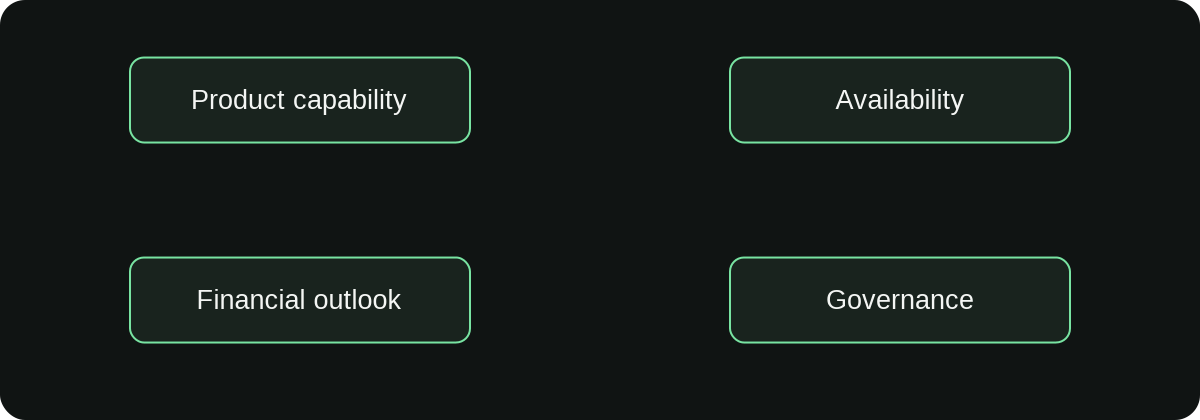
Start with the content, not the excitement around the event. A technical specification concerns product capability; a shipment statement concerns availability; financial guidance concerns expected results; a leadership filing concerns formal roles and governance.
Ask which existing assumption the new information challenges. If the announcement repeats a previously published plan, the speaker’s delivery may attract attention without changing the underlying business fact. A transcript or recording should be compared with the earlier source before calling it a new development.
| Announcement category | Evidence to inspect | Inference to avoid |
|---|---|---|
| Product capability | Specifications and benchmark conditions | A claimed performance gain equals the same revenue gain |
| Availability or adoption | Production, shipment or customer disclosures | Every announced partnership is a completed sale |
| Financial outlook | Period, accounting definition and assumptions | Management guidance is guaranteed revenue |
| Leadership | Board filing and effective role | One person’s status determines every future operating result |
Establish the source and the public timestamp
Use the official release, filing or full recording where available. Record the date and the time when the relevant information first became public. A widely shared excerpt published later can describe an older event.
The NVIDIA investor-relations archive provides company releases and filings for that work. It is a source of company statements, not independent verification of every forward-looking claim. Preserve the distinction between what management says and what later operating results establish.
For formal leadership changes, the November 22 filing and November 23 announcement illustrate another timing distinction: a board action and a public communication are not necessarily the same event clock. Do not assume the action date was an available public signal.
Follow the statement into a business assumption
A useful analysis names the affected variable. A product announcement may change assumptions about performance, customer adoption, pricing or delivery timing. A guidance statement may change expected revenue or costs. A governance event may change perceived continuity or oversight.
Then identify the missing links. Technical capability must reach a product customers can use; demand must translate into orders, delivery and recognized results. A statement about broad industry spending does not establish NVIDIA’s share of that spending or the timing of its earnings impact.
The data-center analysis develops that chain. Keeping the links separate prevents a compelling keynote from being used as evidence for a precise sales estimate that the source never supplied.
Compare the new information with prior expectations
An announcement can be impressive in absolute terms and still disappoint investors who expected more. Conversely, a modest update can matter if it resolves a substantial uncertainty. The relevant comparison is with a defensible prior baseline.
Store the earlier roadmap, guidance or official role description beside the new statement. If referring to market consensus, identify a dated dataset and a comparable measure. Do not infer what everyone expected from the direction of the subsequent stock move.
The absence of a verified baseline should narrow the claim. You can describe what was announced and why it may matter without labeling it a quantified positive surprise or predicting the size of the return.
Separate stock repricing from fund implementation
NVDL’s current objective concerns daily leveraged NVIDIA exposure. It does not multiply a headline’s sentiment score, chip-performance claim or revenue-growth percentage. The stock-price response is an intermediate market outcome, not a direct conversion from the words spoken.
Your own return then depends on entry, exit, the daily sequence, costs and ETF-share pricing. If the announcement becomes public before your order, some repricing may already have occurred. A favorable close-to-close headline can coexist with a loss for a later opening buyer.
The November rally case examines that distinction with provider-reported observations. It supplies a dated example rather than a general rule that Huang appearances generate predictable gains.
Decide what evidence would confirm or weaken the thesis
For a product catalyst, later evidence might include shipment progress, customer adoption and financial commentary. For a leadership event, subsequent filings can clarify roles and oversight. Choose the relevant follow-up instead of treating unrelated positive headlines as confirmation.
Write a condition that could invalidate the interpretation. A delivery delay, a qualification change or a revised assumption may matter more than the next presentation. A thesis that cannot be weakened by evidence is difficult to distinguish from promotion.
Price behavior can be part of the review, but it cannot replace the business evidence or establish the cause by itself. A rising chart does not prove every technical claim, and a falling chart does not show that every announced feature is false.
Keep the conclusion proportional to the evidence
A sound catalyst note states the source, novelty, affected assumption and unresolved links. It also identifies the intended market window and the risk of trading after a repricing. This creates a useful interpretation without manufacturing a price target.
Before acting, check whether the account can manage the exposure through the relevant sessions. A correct reading of a statement does not remove concentration, gaps or daily path dependence. The investment decision still requires a funded loss budget and a realistic operating plan.
Frequently asked questions
Does a live appearance carry more investment information than a written release?
It may add detail, but the format does not prove novelty or reliability. Compare the specific statement with existing documents and preserve its context. A dramatic presentation of an old fact is still an old fact.
Can a partner’s repost confirm that an announced sale occurred?
Not necessarily. A repost can repeat marketing language without establishing contract value, delivery or revenue recognition. Look for independent, specific supporting disclosure before making that stronger claim.
What if a translation changes the meaning of a statement?
Check the original recording and an authoritative transcript where available. Preserve uncertainty about material wording instead of building a trading thesis on an ambiguous translation or a shortened caption.