 NVDL
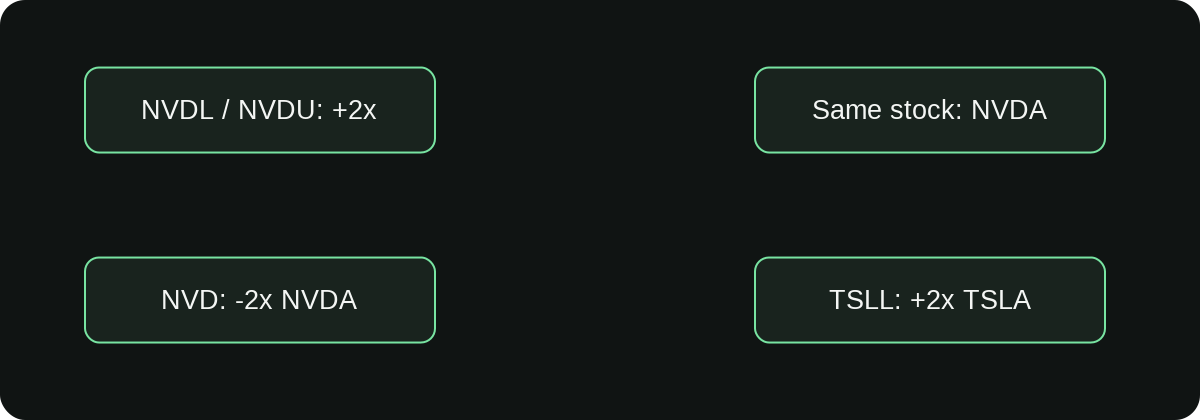
Compare NVDL with other single-stock leveraged ETFs by underlying company, direction and daily target before comparing costs. NVDU is a same-stock bullish peer, NVD reverses the NVIDIA direction, and TSLL changes the underlying business to Tesla.
These are different comparisons, not four interchangeable ways to make the same investment. A fund can have a similar multiplier and still introduce a different economic exposure. An effective comparison identifies the job first, then checks the documents and live trading conditions needed to perform it.
Sort the funds into meaningful groups
Use current issuer objectives rather than a search result that may preserve an old launch description. The NVDL prospectus, Direxion NVIDIA page, NVD summary and Direxion Tesla page establish the distinctions below.
| Fund | Underlying company | Stated daily direction and magnitude | Appropriate comparison question |
|---|---|---|---|
| NVDL | NVIDIA | +2x | Starting reference |
| NVDU | NVIDIA | +2x | How do two similar objectives differ in implementation and execution? |
| NVD | NVIDIA | −2x | Do I want the opposite daily direction? |
| TSLL | Tesla | +2x | Am I changing the company exposure rather than just the fund? |
The objectives are not return guarantees. Each comparison also requires current fund documents, account access and a defined holding period. A bullish Tesla ETF is not an NVIDIA alternative merely because both companies appear in an AI-themed discussion.
Use NVDU for the closest objective comparison
NVDL and NVDU both target amplified daily NVIDIA exposure, making them a more relevant starting pair for implementation analysis. That similarity does not establish identical realized returns, derivative positions, operating expenses or market prices.
Compare the latest summary prospectuses and date the fee tables. Separate management charges, other operating expenses, acquired-fund expenses, waivers and any financing costs described outside the table. If a cost is an estimate for a future fiscal period, preserve that qualification.
Then inspect actual trading conditions for the intended order. A fund with a lower published expense figure can still be more expensive for a short trade if its spread or execution is less favorable. Conversely, one tight snapshot does not establish the permanently cheaper fund. There is no verified current spread ranking in this guide.
Treat inverse products as a change in the view
NVD is not a discount substitute for NVDL. It changes which direction of NVIDIA movement benefits the simplified daily exposure. Selecting it because its share price looks lower confuses unit price with economic purpose.
If the intent is a hedge, calculate the existing exposure and the interval being protected. A daily inverse position can drift relative to a longer-held stock portfolio. Equal dollar allocations in bullish and bearish leveraged ETFs do not create a guaranteed neutral result after repeated resets.
Also distinguish the other Direxion NVIDIA ticker: NVDD has a daily −1x target, not NVD’s −2x target. Similar letters can hide a materially different magnitude. The separate bull-and-bear comparison shows how that distinction affects the analysis.
Recognize when you are changing the company
TSLL targets Tesla rather than NVIDIA. Its relevant operating news can include vehicle demand, pricing, manufacturing and other Tesla-specific developments. NVIDIA’s GPU revenue and data-center customers do not provide a complete basis for evaluating that business.
Two stocks can move together during a broad technology rally while responding differently to company news. A historical correlation is not a permanent hedge relationship. Daily leverage amplifies the selected underlying’s movement; it does not make different underlying companies converge.
If the goal is diversified technology exposure, compare that goal with an actual diversified product separately. Owning several leveraged single-stock funds can still concentrate the portfolio in a small set of correlated risk drivers. The SEC’s single-stock ETF guidance explains why the ETF label does not itself provide diversification.
Build a comparison sheet with an evidence column
A useful comparison records both the value and its source date. Leave a field blank when the evidence is unavailable rather than filling it with a confident-looking assumption. That is especially important for quote-sensitive fields and changing fee waivers.
Include the current objective, measurement period, fund-document date, gross and net expense fields, waiver conditions, separately described financing, spread observation and broker restrictions. Add the intended holding period and order size so the comparison relates to a real task.
Do not compare a current quote for one fund with yesterday’s close for another. Performance comparisons also need the same start and end timestamps, adjustment conventions and treatment of distributions. A higher return over a selected period can reflect a different underlying move rather than superior fund implementation.
Avoid rankings based on share price or recent winners
A $10 share is not necessarily cheaper exposure than a $100 share. Position value depends on quantity, and leverage depends on the fund objective. Splits can change the displayed unit price without generating an economic gain by themselves.
Similarly, selecting whichever fund rose most recently can amount to choosing the underlying or direction after the fact. A valid evaluation distinguishes the original trading thesis from hindsight. If the future path reverses, the prior winner may not remain the best result.
The decision record should explain why the chosen objective fits, which costs are actually comparable and which fields remain uncertain. It should not convert a short list into a universal “best leveraged ETF” recommendation. Account eligibility and personal loss capacity still require separate consideration.
Frequently asked questions
Do funds with the same target use identical counterparties?
Do not assume so. Review each fund’s dated holdings and financial disclosures. A shared target describes the intended exposure, not a common contract book, and a holdings snapshot can change after publication.
Can I compare NVDL’s full history with a newer peer’s shorter history?
Use a common available window and disclose any objective changes or incomplete history. A since-inception ranking with different starting dates answers a different question and can exaggerate differences created by the market period.
Does buying a foreign-listed version solve US account restrictions?
It may introduce a different legal structure, currency, exchange, tax treatment and eligibility requirements. Verify that instrument independently; a similar ticker or marketing name does not make it the same US ETF or remove local restrictions.