 NVDL
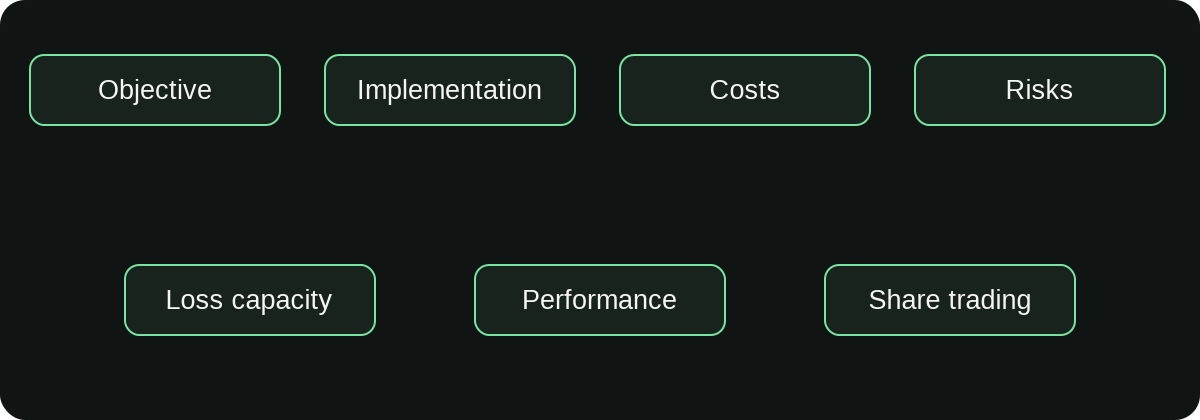
Read NVDL’s prospectus for the exact daily objective, permitted strategies, costs, loss risks and share-trading rules. A fund name or broker description cannot replace those terms, and a regulatory filing is not an endorsement of the investment.
This reading guide uses the October 28, 2026 SEC-filed NVDL summary prospectus. Check supplements and later versions before relying on it. The seven questions below turn a long legal disclosure into a decision record without pretending that a short checklist captures every provision.
1. What return period does the objective actually cover?
Find the underlying security, direction, multiplier and measurement interval. NVDL seeks positive leveraged exposure to NVIDIA, with a daily target defined around regular-session closes. It does not promise to double a year’s NVIDIA return or every intraday movement after your purchase.
Write that interval beside your intended entry and exit. If the times differ, the objective and your trade return answer different questions. This is the first mismatch to resolve because it affects how every later performance comparison should be interpreted.
The SEC’s leveraged-ETF bulletin provides useful background on holding-period differences. Use it to understand the mechanism, then return to the current fund document for NVDL’s specific terms. A general explanation cannot establish the exact provisions of a particular fund.
2. How can the fund obtain the exposure?
Read the principal strategies for derivatives, collateral and any alternative implementation. NVDL primarily uses swaps and has other permitted approaches. A cash or Treasury position shown in holdings can support leveraged exposure; it does not necessarily mean the fund is avoiding its stock-related risk.
Distinguish permission from a dated position. A prospectus describes what the fund may do under its terms, while a holdings file describes a snapshot. Neither proves that the same counterparties, weights or instruments remain in place indefinitely.
If the issuer’s simplified page and prospectus sound different, compare their scope before declaring a contradiction. For example, a marketing description of current swap implementation should not be transformed into a legal claim that the fund can never hold a permitted alternative instrument.
3. Which costs are inside and outside the table?
Identify management fees, other expenses, acquired-fund expenses, gross expenses, adjustments and the net figure. Then read the footnotes. A waiver can exclude categories and end on a specified date; its headline ceiling is not necessarily a cap on every economic cost.
The current disclosure also describes estimated swap-related costs outside the operating-expense table. Do not simply present the management charge as the investor’s total cost, or combine estimates into an exact annual bill. Your trading costs and any account borrowing charges form additional layers.
The detailed fee guide preserves the current table and exclusions. For a comparison, use documents dated consistently and identify whether a figure is prospective, historical or estimated. Similar-looking percentages can measure different things.
4. What can prevent the intended exposure or execution?
Read the principal-risk section as a description of mechanisms, not a collection of words to skip. Counterparty performance, derivatives, rebalancing constraints and market interruptions can affect implementation. A daily target is not an unconditional commitment that the result must match exactly.
Separate fund implementation from your brokerage execution. The fund can have a NAV calculation while your ETF-share order faces a spread, a premium or discount, a halt or an unfilled limit. Those differences require different evidence when a trade disappoints.
Record the risks your plan depends on avoiding. If the plan assumes continuous liquidity or a guaranteed stop price, the disclosure should prompt a revision. Merely acknowledging that the product is risky does not repair an operational assumption that cannot hold.
5. Can I absorb the disclosed loss possibility?
The document warns that the investment can be lost in a single day. Read that as a material constraint, not as a decorative disclaimer attached to an otherwise ordinary stock fund. A model that assumes a recoverable balance after every event is incomplete.
Calculate the consequences for your finances if the position becomes unavailable for planned spending or suffers a severe loss. Include overlapping NVIDIA-sensitive holdings. The ETF wrapper does not diversify away the underlying company exposure.
The sharp-decline article walks through loss and recovery arithmetic. Its examples do not assign probabilities. A stress calculation helps test whether the position is financially survivable, but it cannot certify that the actual event will stay within the tested scenario.
6. What does the performance section establish?
Historical returns describe particular periods under the stated conventions. They do not forecast the next year. Check whether a result uses NAV or market prices, assumes reinvestment and spans an objective change.
A benchmark comparison also needs the benchmark’s identity. A broad-market index may provide context without measuring whether the daily NVIDIA target was achieved. Do not read every comparator as the underlying stock or as an implementation test.
For older periods, verify the leverage regime and corporate-action adjustments. NVDL’s history includes a prior objective and stock splits. A clean-looking chart can still combine periods that should not be treated as one constant-2x experiment.
7. How are shares traded and payments treated?
The purchase-and-sale section explains the secondary-market process through brokers and the possibility of premiums, discounts and spreads. Most retail holders do not transact directly with the fund at NAV. The number on an issuer page is therefore not a standing offer to fill your order.
Read the tax and intermediary-payment sections as well. Distributions and share sales can have different tax consequences, while intermediary compensation can create conflicts. Availability through a platform is not itself a recommendation or a suitability finding.
Finish with a one-page record: document date, objective, intended holding interval, implementation, costs, critical failure conditions and unresolved questions. If a material field is unclear, obtain an explanation before placing the trade rather than replacing uncertainty with an assumption.
Frequently asked questions
Is the summary prospectus the only document I need?
No. It points to the full prospectus, additional information, reports and amendments. Consult those materials when a question requires detail beyond the summary, and preserve the version relevant to the decision.
Does filing with the SEC mean the agency approves the strategy?
No. Registration and disclosure are not a government recommendation, performance guarantee or protection against investment loss. Evaluate the disclosed structure rather than treating a filing reference as a safety badge.
Should I keep an older version after a supplement appears?
Yes, for a dated decision record, while clearly identifying the operative update. Older versions can explain what information was available when you traded, but should not silently replace amended terms in current-facing guidance.