 NVDL
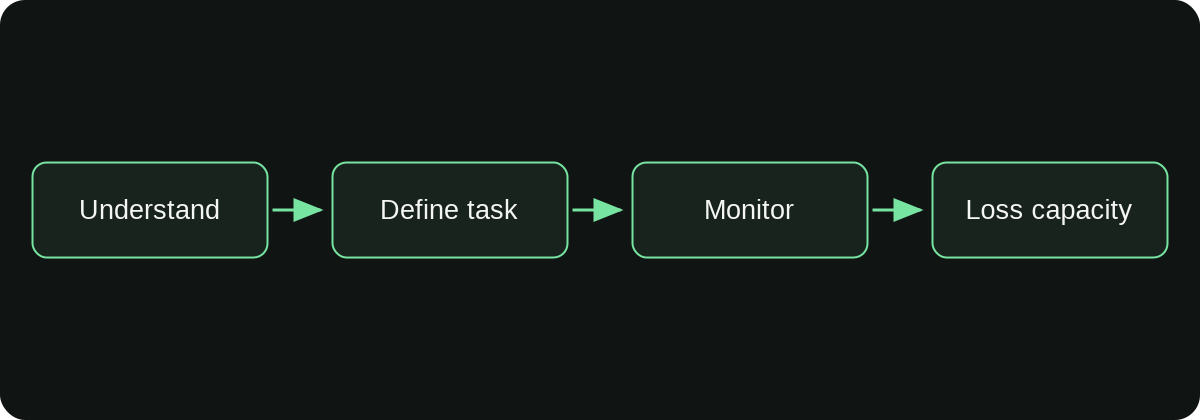
NVDL is not a straightforward beginner substitute for NVIDIA stock. It requires understanding a daily leveraged objective, changing exposure and execution risk, alongside the ability to monitor the position. Whether someone has traded before matters less than whether the product fits the task, resources and loss capacity actually involved.
Replace “good investment” with a defined job
Start by describing the intended job without naming a ticker. Is it long-term ownership in a company, diversified exposure to an industry, or a specific short-term trade? These are different tasks. A favorable opinion of NVIDIA does not explain why daily leverage is necessary to accomplish any one of them.
Then define the horizon and the reason it might change. A trade planned for one session can become a multi-day holding when the trader refuses to realize a loss. That change introduces a different return path from the one originally considered, without any new analysis of suitability.
The issuer’s factsheet and investor-risk description identify the product as intended for knowledgeable users and short-term trading. This does not mean every person calling themselves an active trader is suitable. It means product access should not be mistaken for a basic endorsement of a beginner’s plan.
Test understanding with explanations, not a confidence score
Before considering an order, explain why the ETF price need not be twice NVIDIA’s share price. Next, explain why a two-day return need not equal twice the stock’s two-day return. Finally, explain why a purchase made halfway through a session creates a different measurement interval from the fund’s reference day.
These are separate questions. Memorizing that the fund is “2x” does not answer them. Work through the daily-return calculation and check whether you can reproduce it without relying on a social-media claim about an expected gain.
If the explanation breaks down, the next step is learning rather than increasing position size to make the trade feel more worthwhile. There is no benefit in reaching a confident allocation decision while the underlying arithmetic remains unclear. A product can be understandable without being necessary for your objective.
Monitoring is a practical resource, not a slogan
Identify when you can actually check positions, announcements and orders. A person working during US market hours may not be able to respond promptly. A phone notification can be delayed, missed or unavailable, and a quote alert is not an executed order.
Plan for an interruption before opening the trade. What happens if internet access fails, a broker’s application is unavailable, or a required approval blocks a new order? Ask the broker about alternative contact and order channels, then retain those details independently of the application.
The SEC’s discussion of day-trading risk emphasizes the complexity involved. Monitoring capacity does not guarantee success, but an approach that requires active management is incompatible with a plan to ignore the account until recovery.
Loss capacity is different from willingness to feel nervous
Risk tolerance concerns willingness to experience uncertainty; loss capacity concerns the financial consequences of losing money. A trader may feel comfortable with volatility while relying on the funds for a near-term bill. Those conditions do not become compatible because the trade is described as temporary.
Identify the effect of losing the allocated capital rather than assuming an exit will always limit the loss to a chosen percentage. Gaps, halts and unfilled orders can defeat the planned path. A smaller allocation can reduce dollar exposure without turning the instrument itself into a low-risk product.
Do not use a hypothetical recovery target as evidence of capacity. Money needed for essential obligations cannot be made safely available by forecasting a rebound. This distinction is useful even before deciding between NVDL, NVDA or another way of expressing the underlying view.
Compare alternatives by the risk you actually need
If the job is company ownership, compare it with the characteristics of company shares. If the job is broader industry exposure, examine whether a diversified structure serves that need. Neither comparison requires claiming that an alternative is risk-free or will perform better.
If the job is leveraged exposure, explain why the leverage and daily horizon are essential. Borrowing in a brokerage account, options and leveraged ETFs have different obligations and payoffs. Substituting another complex instrument without understanding it does not solve a suitability problem.
A comparison should make the unneeded risks visible. If a feature adds monitoring, cost or execution dependence without helping accomplish the task, its presence needs justification. A recent attractive return is not that justification by itself.
Use a decision record before a trading ticket
| Decision area | Evidence of a workable plan |
|---|---|
| Product understanding | A correct explanation of the daily objective and path effects |
| Purpose | A specific task requiring this exposure |
| Resources | Monitoring time and an interruption procedure |
| Financial capacity | Loss does not depend on a promised recovery |
| Execution | Order terms and failure conditions understood |
A blank area is a reason to pause the process, not a signal to borrow another person’s conviction. The table is a learning and planning tool; it is not a personalized suitability determination or a substitute for an appropriately informed professional review.
You can also keep a practice record without placing a real order. Record what would have triggered the decision, the observable prices and the assumptions. Treat a simulation honestly: it does not reproduce the emotional pressure or execution conditions of a funded account.
Reassess when the purpose changes
Revisit the decision if the holding horizon extends, needed cash changes or monitoring becomes impossible. The initial plan does not remain valid simply because the share ticker is unchanged. A changed situation deserves a fresh examination rather than a label such as “now a long-term investment.”
Retain a written reason for continuing, reducing or closing a position. The purpose is not to enforce a rigid prediction. It is to expose whether the decision still follows the task or has become an attempt to avoid acknowledging a loss.
Frequently asked questions
Does passing the broker’s knowledge questionnaire prove suitability?
No. Access checks and agreements have their own purpose, but they do not establish that the trade fits every financial circumstance. Your horizon, financial needs and ability to manage the position still require examination.
Does a small first trade remove the need to understand the product?
No. It limits the dollars involved, not the complexity. A small position can still reinforce a mistaken mental model, especially if an early gain is interpreted as proof that the strategy is predictable.
Can I learn by copying an experienced trader’s allocation?
Their allocation may depend on capital, other holdings, timing and obligations you cannot see. Use the reasoning as a question to investigate, rather than treating a copied percentage as evidence that your own plan is appropriate.